

California Wine Guide
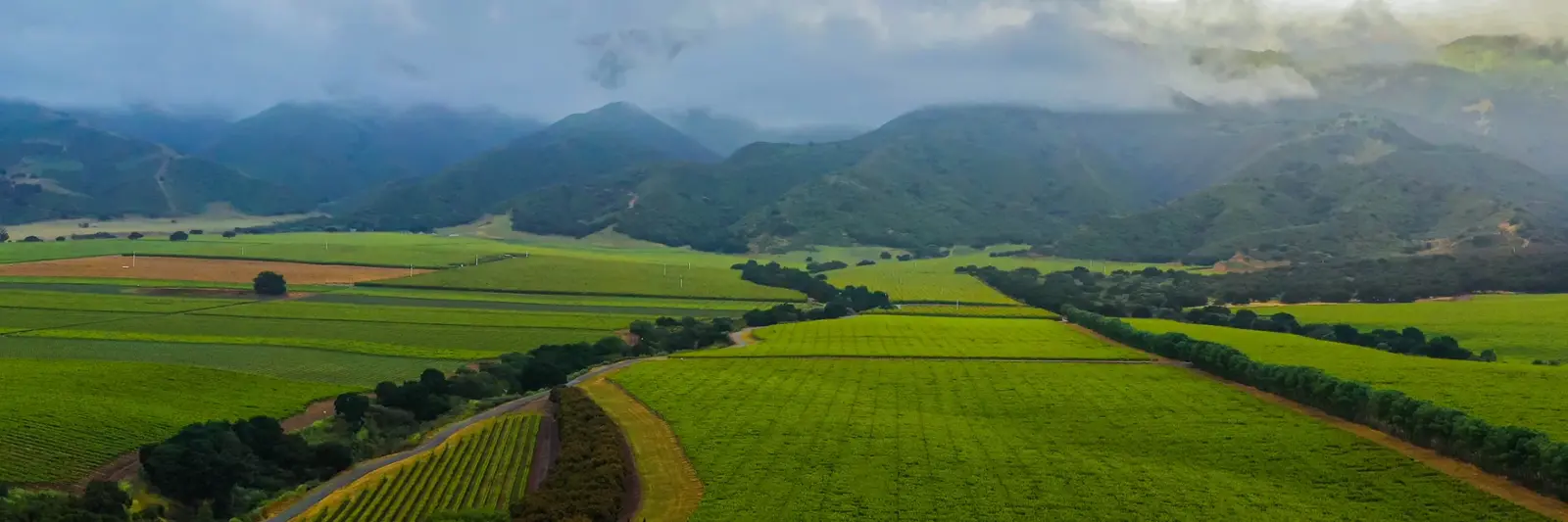
Styles, Regions, Grapes and How to Choose
California wine is wine made in the state of California, on the west coast of the United States. The state produces around 80% of all American wine and, on its own, ranks among the largest wine regions in the world. Generous sunshine and cold air from the Pacific Ocean give California an unusually wide range, from approachable, fruit-forward bottles to age-worthy wines counted among the finest anywhere.
In this guide, Iconic Wine Japan, a specialist importer of California wine in Japan, explains what makes these wines distinctive, the main regions and grape varieties, and how to choose a bottle that suits you.
Contents
What makes California wine distinctive
A reliable climate and ripe fruit
Most of California's wine regions have a Mediterranean climate, with almost no rain in summer. Grapes receive plenty of sun through the growing season and ripen fully, giving wines with generous fruit and a smooth texture. Weather varies less from year to year than in many European regions, so quality is consistent across vintages, which makes the wines easier to choose.
Ocean air that brings freshness and balance
California has a warm image, but a cold ocean current sends fog and cool wind into its coastal valleys. Warm days followed by cold nights help grapes keep their acidity, producing wines with structure and freshness as well as fruit. Within the same state, a cool vineyard near the ocean and a warm vineyard inland make completely different wines.
Labels you can read by grape variety
Most California wines show the grape variety, such as Cabernet Sauvignon or Chardonnay, clearly on the label. You can choose by the grape you enjoy without memorising place names, which makes California an easy starting point for people new to wine.
Small producers and real diversity
The big brands are well known, but California is also home to a great many small, family-run wineries. Organic and biodynamic farming, native-yeast fermentation and restrained use of oak are increasingly common, and each producer's philosophy shows in the glass. In recent years, more delicate and elegant styles have earned particular acclaim.
The main California wine regions
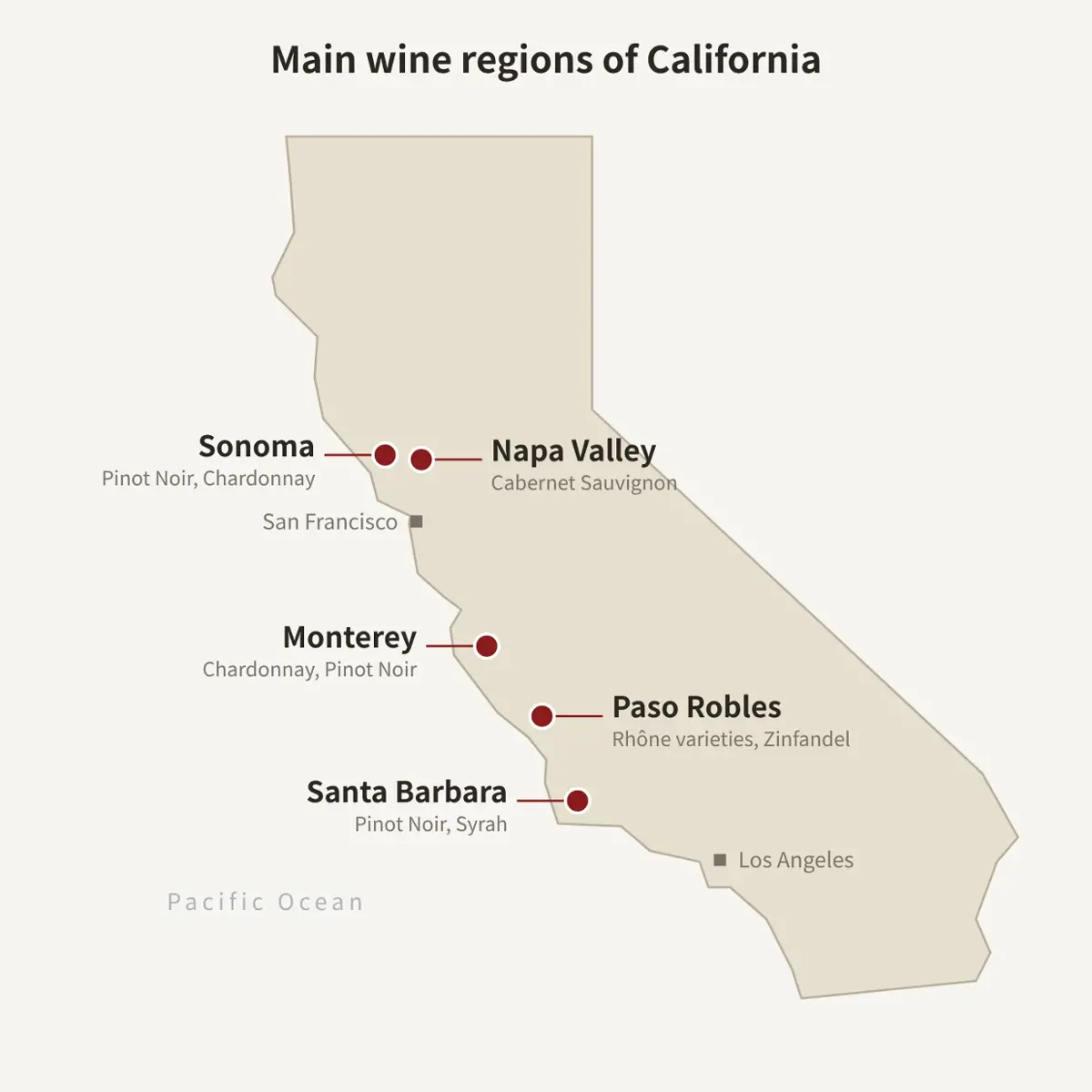
California has more than 150 officially recognised growing areas, known as AVAs (American Viticultural Areas). These five are the best places to start.
Napa Valley
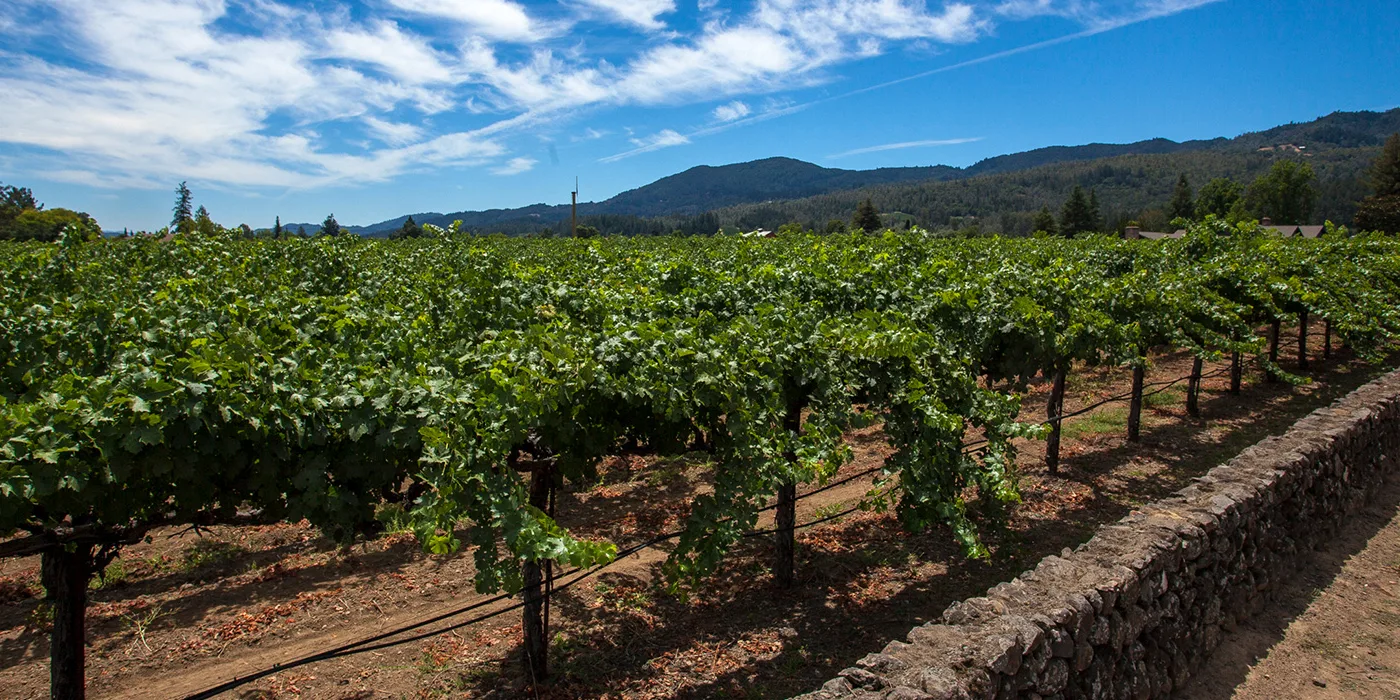
The most famous region, and the one that made California's name around the world. Napa accounts for only a small share of the state's production, but it is known for concentrated, structured Cabernet Sauvignon and is home to many internationally celebrated wineries. The southern end of the valley is cooler and it grows warmer to the north, and hillside vineyards taste different again from those on the valley floor.
See Napa Valley wines and producers
Featured producers: Whitehall Lane Winery, Rombauer Vineyards, Massican
Sonoma
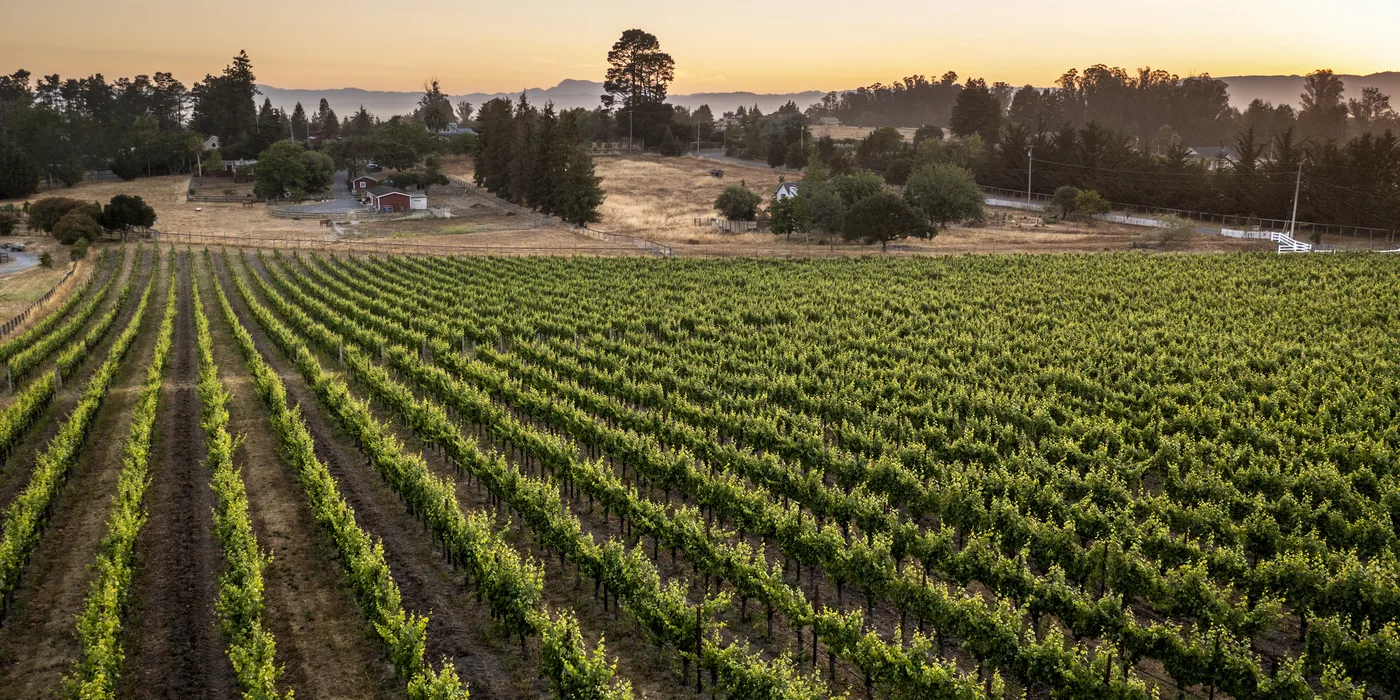
A large and varied region immediately west of Napa. The Sonoma Coast and Russian River Valley, close to the Pacific, are cool and known for fine Pinot Noir and Chardonnay. Further inland, areas such as Dry Creek Valley produce powerful reds from old-vine Zinfandel.
See Sonoma wines and producers
Featured producers: Cobb Wines, August West Wines, Sandler Wine Company
Santa Barbara
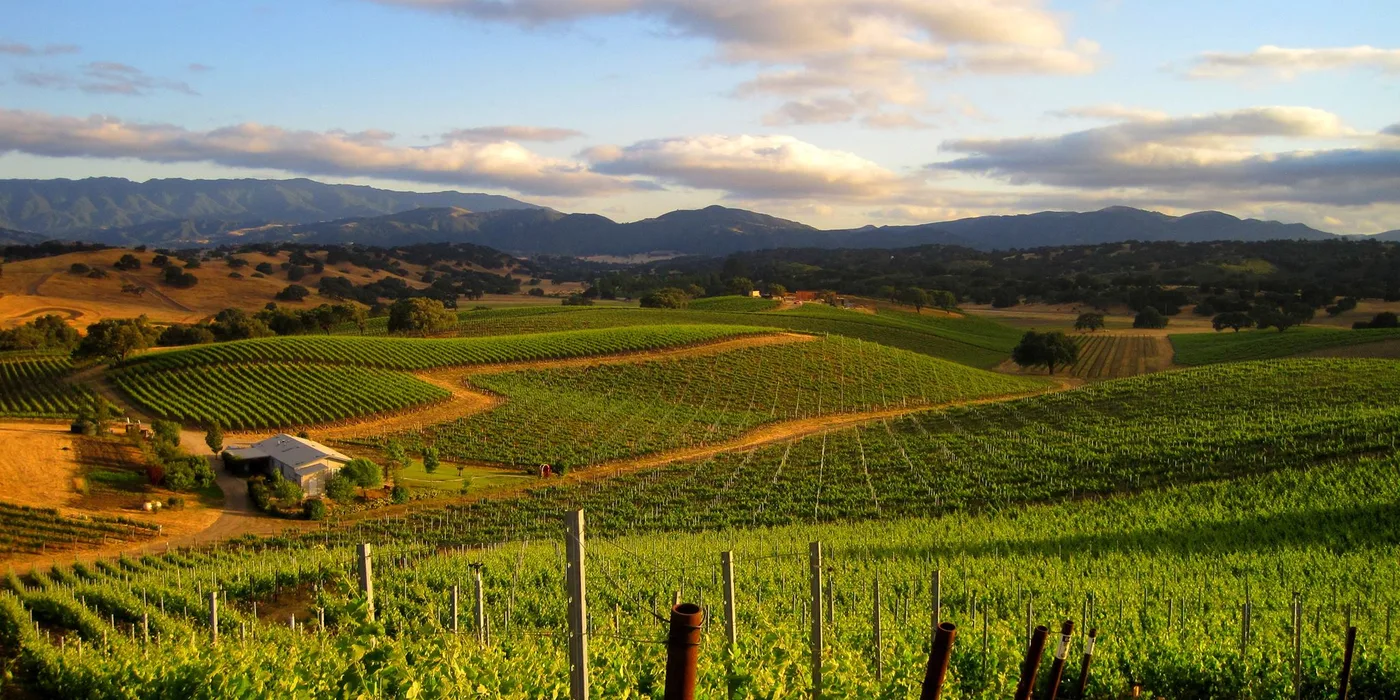
A region north-west of Los Angeles. Its mountain ranges run east to west, which is unusual, so cold Pacific air flows straight inland and the climate is remarkably cool for somewhere so far south. Pinot Noir and Chardonnay from the Sta. Rita Hills and Santa Maria Valley, and Syrah from Ballard Canyon, are highly regarded.
See Santa Barbara wines and producers
Featured producers: Stolpman Vineyards, Melville Winery, Bien Nacido & Solomon Hills Estates
Paso Robles
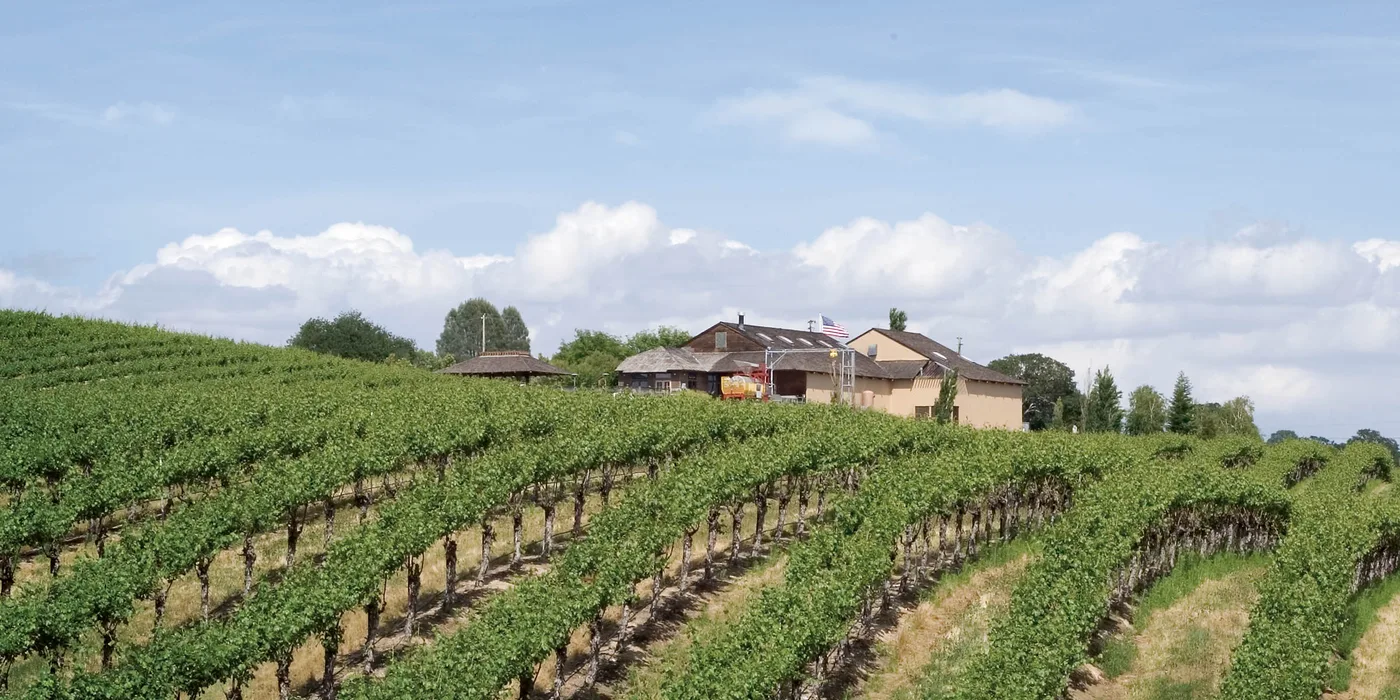
A fast-rising region roughly halfway between San Francisco and Los Angeles. The difference between day and night temperatures is very large, and Rhône varieties such as Syrah and Grenache, along with Cabernet Sauvignon and Zinfandel, give rich, powerful wines. The region is also known for inventive blends.
See Paso Robles wines and producers
Featured producers: Eberle Winery, Peachy Canyon Winery, Denner Vineyards
Monterey
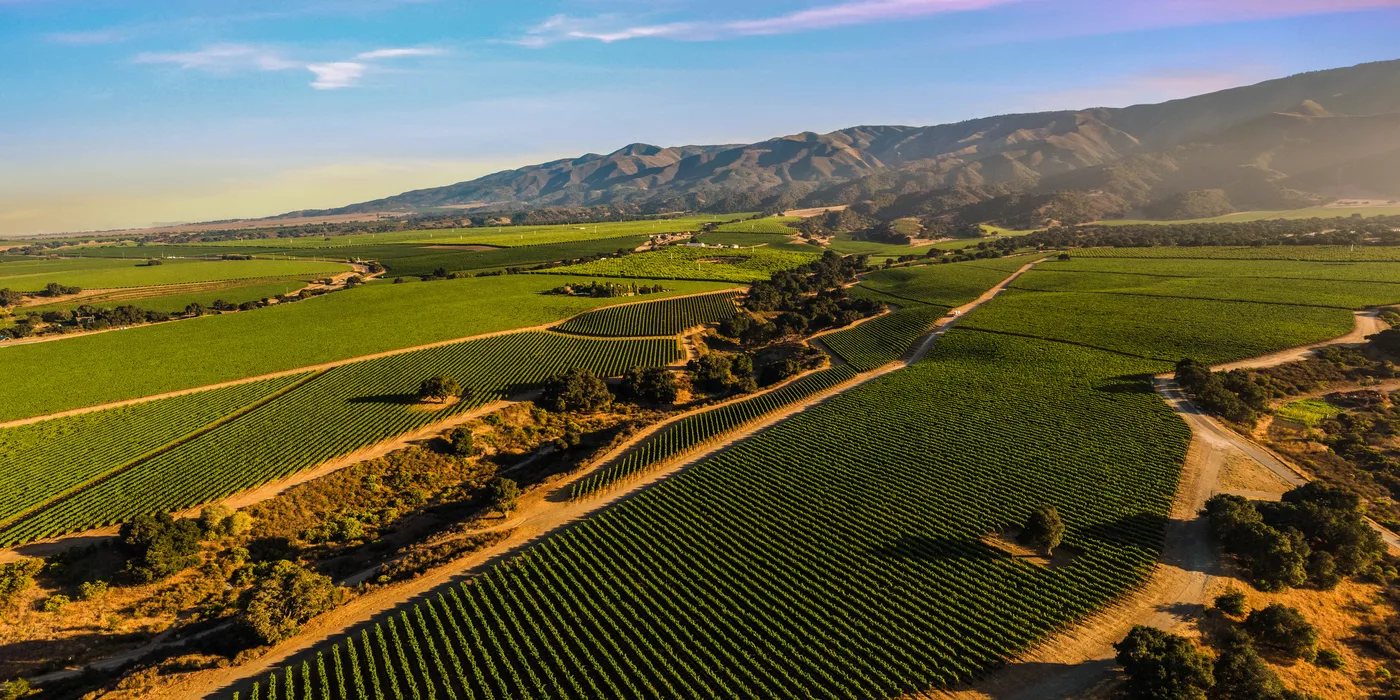
A cool region strongly influenced by the cold wind and fog from Monterey Bay. The growing season is long and grapes ripen slowly, producing Chardonnay and Pinot Noir with clean, bright acidity. The Santa Lucia Highlands is especially well known for quality.
See Monterey wines and producers
Featured producers: Roar Wines, Morgan Winery, Divum
The main grape varieties
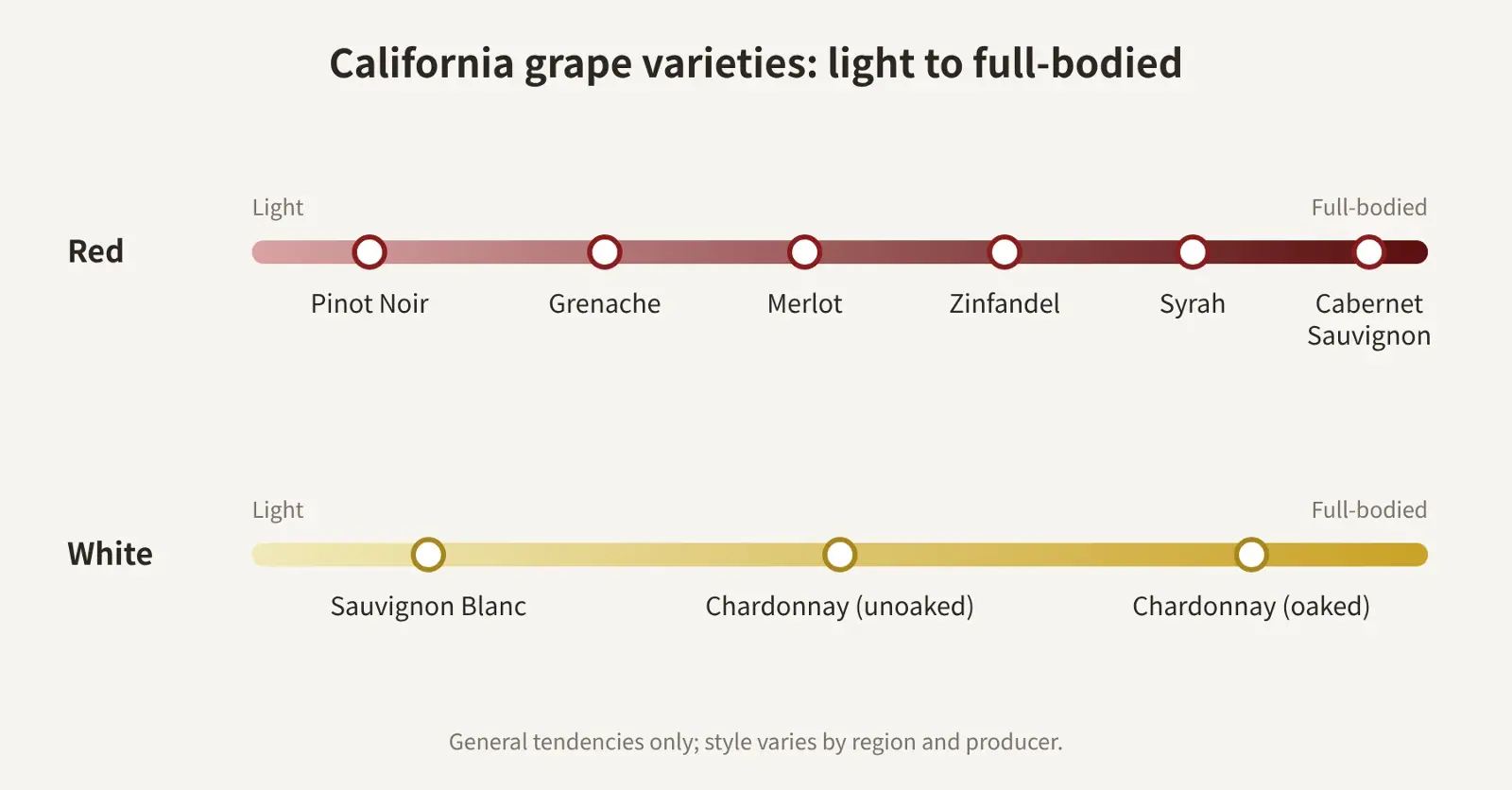
Red grapes
- Cabernet Sauvignon: California's signature red grape. Rich blackcurrant and blackberry fruit with firm tannins, ideal with steak and other meat dishes. Napa Valley is the most famous source.
- Pinot Noir: a delicate grape grown in the cool coastal areas. Red-fruit aromas and a silky texture, mainly from Sonoma, Santa Barbara and Monterey.
- Zinfandel: the grape most closely identified with California. It makes generous, fruit-driven reds with ripe berry and spice flavours, and wines from old vines are especially concentrated.
- Syrah and Grenache: varieties that originated in France's Rhône Valley. Spicy and layered, with excellent examples from Santa Barbara and Paso Robles.
- Merlot: soft tannins and rounded fruit, an easy recommendation for people who are new to red wine.
White grapes
- Chardonnay: the most widely planted white grape in California. Styles range from rich and barrel-aged to crisp with little or no oak, depending on the producer.
- Sauvignon Blanc: fresh citrus and herbal aromas with crisp acidity. It pairs easily with seafood and Japanese food.
To browse by colour or type, see our lists of red wines, white wines, rosé wines and sparkling wines.
How to choose a California wine
1. Start with the grape that matches your taste
The simplest way is to choose by variety. For a full, substantial red, look for Cabernet Sauvignon. For something lighter and more refined, Pinot Noir. For an easy-going red full of fruit, Zinfandel. Among whites, Chardonnay suits those who like richness and Sauvignon Blanc those who prefer freshness.
2. Consider the region's climate
The same grape tastes different from one region to another. Wines from cool areas near the ocean, such as the Sonoma Coast, Santa Barbara and Monterey, tend to be elegant with bright acidity. Wines from warmer inland areas, such as northern Napa Valley and Paso Robles, tend to be riper and more powerful.
3. Look at how specific the place name is
The place named on the label is one clue to the style. As a general rule, a wine labelled simply "California" draws on grapes from across the state and is made for everyday drinking. A regional name such as "Napa Valley" or "Santa Barbara County" shows more of that area's character. A wine that names a single vineyard is usually a higher-level bottling that expresses that one site.
4. Learn to read the label
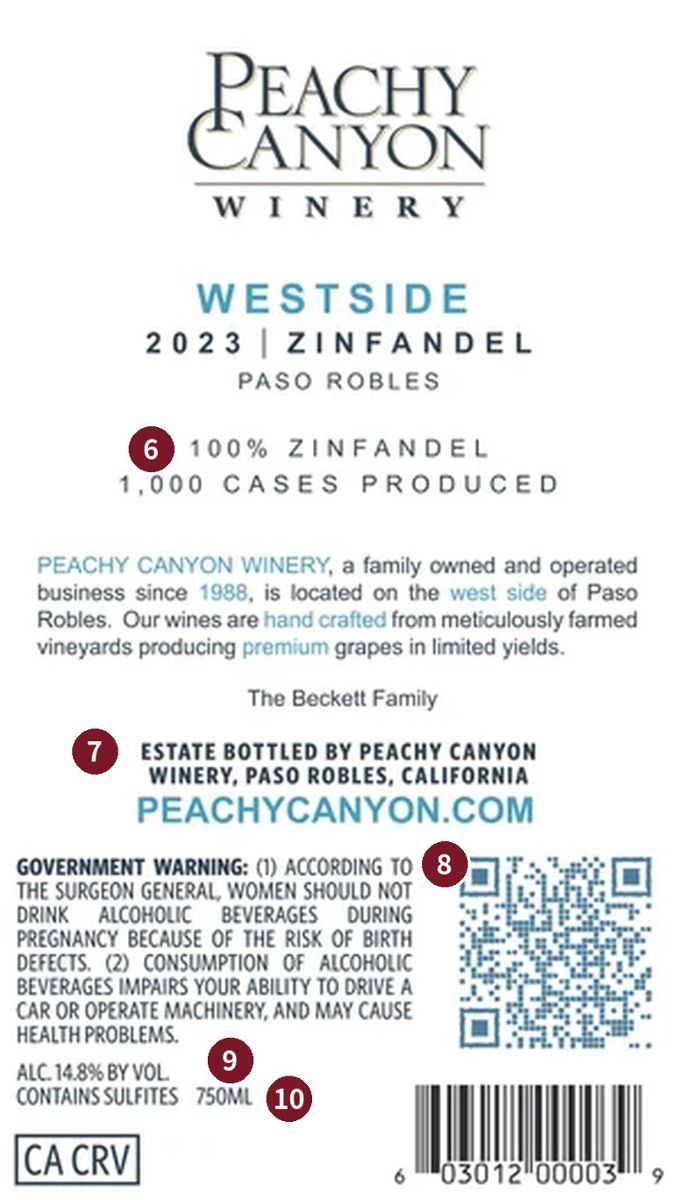
Wine labels in the United States are approved in advance by a federal agency (the TTB), and minimum percentages lie behind the grape variety and place names. Here is Peachy Canyon's "Westside" Zinfandel 2023 as an example.
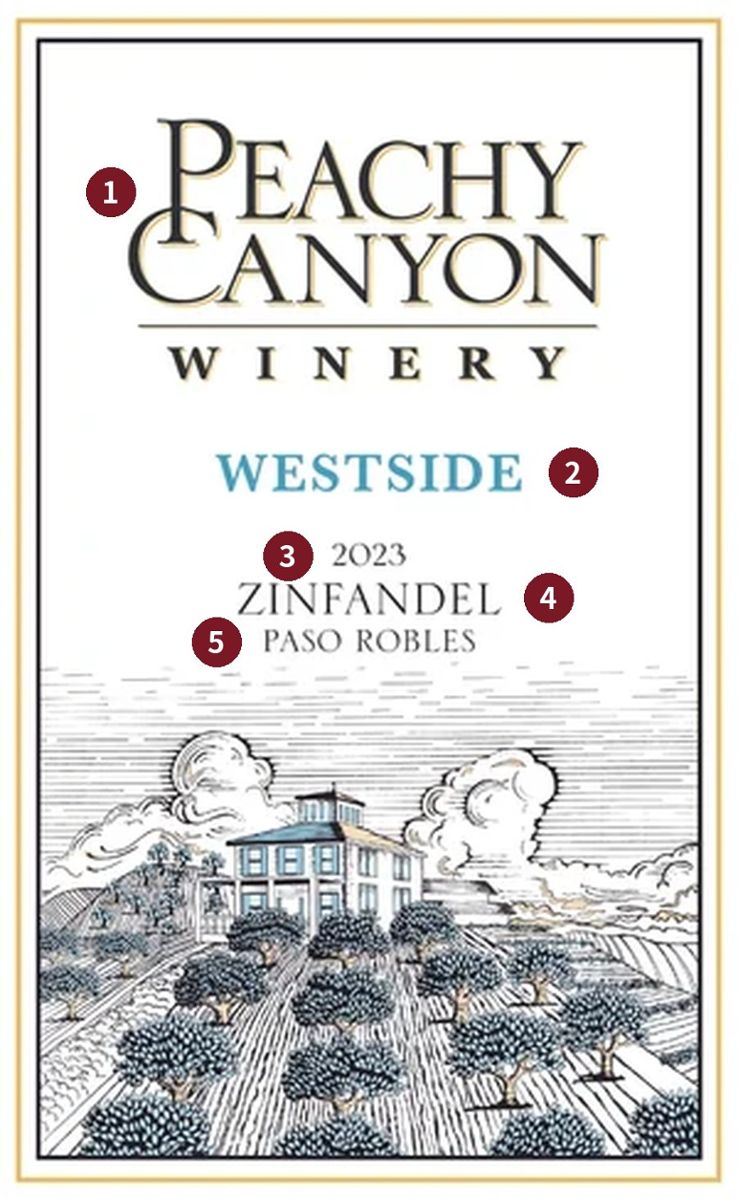
Front label
- Producer (brand name): Peachy Canyon Winery. This tells you who made the wine.
- Wine name: Westside. A name chosen by the producer; it is not a legal statement of origin.
- Vintage (harvest year): 2023. When the place named is an AVA, at least 95% of the grapes must have been harvested in that year.
- Grape variety: Zinfandel. To name a variety, the wine must contain at least 75% of it.
- Appellation (AVA): Paso Robles. An AVA is an officially recognised growing area, and at least 85% of the grapes must come from it. A wine labelled "California" must, under state law, be made entirely from California grapes.
Back label
- Variety percentage: 100% Zinfandel. An optional statement, showing that the wine goes beyond the 75% minimum and is made from Zinfandel alone.
- Estate Bottled: the winery grew the grapes in vineyards it owns or controls, within the same AVA as the winery, and made and bottled the wine itself.
- Government warning: the health warning required on all alcoholic drinks sold in the United States.
- Alcohol content: 14.8% by volume.
- Sulfites and volume: "Contains sulfites" and the bottle size (750 ml), both required statements.
5. Match the occasion and the food
For everyday meals, choose a wine with straightforward, easy fruit. For a celebration or a gift, choose a bottle that clearly expresses its region or vineyard. Because California wines are generous in fruit, they also go well with sweet-and-savoury Japanese dishes such as yakitori, teriyaki and sukiyaki.
A short history of California wine
Winemaking in California began in the late 18th century, when Spanish missionaries planted vines to make wine for Mass. The Gold Rush of the mid-19th century brought a surge in population and the wine industry grew with it, but Prohibition, from 1920 to 1933, forced many wineries to close.
The turning point came in 1976 at a tasting in Paris, now known as the Judgment of Paris. In a blind tasting judged by leading French experts, California wines were ranked first among both the reds and the whites, ahead of some of France's most famous wines, to the surprise of the wine world. California's standing as a world-class region dates from that event, and its quality and diversity have continued to grow ever since.
Frequently asked questions
Is California wine good for beginners?
Yes. Many California wines have clear fruit flavours with gentle tannins and acidity, and the grape variety is printed on the label, so they are easy to choose and enjoy for people who are just starting with wine.
Is Napa Valley wine the same as California wine?
Napa Valley is one region within California. Every Napa Valley wine is a California wine, but California wine also includes wines from many other regions, such as Sonoma and Santa Barbara.
Are there good and bad vintages in California?
California's climate is stable, so vintages differ less than in European regions. Each year has its own character, but being able to choose without worrying about a poor vintage is one of the advantages of California wine.
How should I store California wine?
Keep it somewhere cool and dark, away from direct sunlight, heat and sudden changes in temperature. If you are storing a bottle with a cork for a long time, lay it on its side so the cork does not dry out.
California wine from Iconic Wine Japan
Iconic Wine Japan has specialised in importing California wine since its founding in 2012. We work directly with around 30 small producers across Napa Valley, Sonoma, Santa Barbara, Paso Robles, Monterey and beyond, bringing wines that show each winemaker's character to Japan. We supply restaurants and wine shops wholesale, and individual customers can buy from a single bottle in our online shop.